
Lime Wash vs Paint: Which Finish Suits You?

If you are weighing up lime wash vs paint, the real question is not simply which one looks better on a sample board. It is which finish suits the building, the room, the level of wear, and the result you want to live with for years. Two walls can start in the same shade and end up feeling completely different once texture, movement and light come into play.
For some properties, standard paint is exactly the right choice - clean, reliable, durable and easy to maintain. For others, lime wash offers something standard paint cannot quite replicate: depth, softness and a naturally varied surface that gives a space quiet character. The best option depends on whether you want consistency or nuance, practicality or atmosphere, or, in many cases, a careful balance of both.
Lime wash vs paint: the core difference
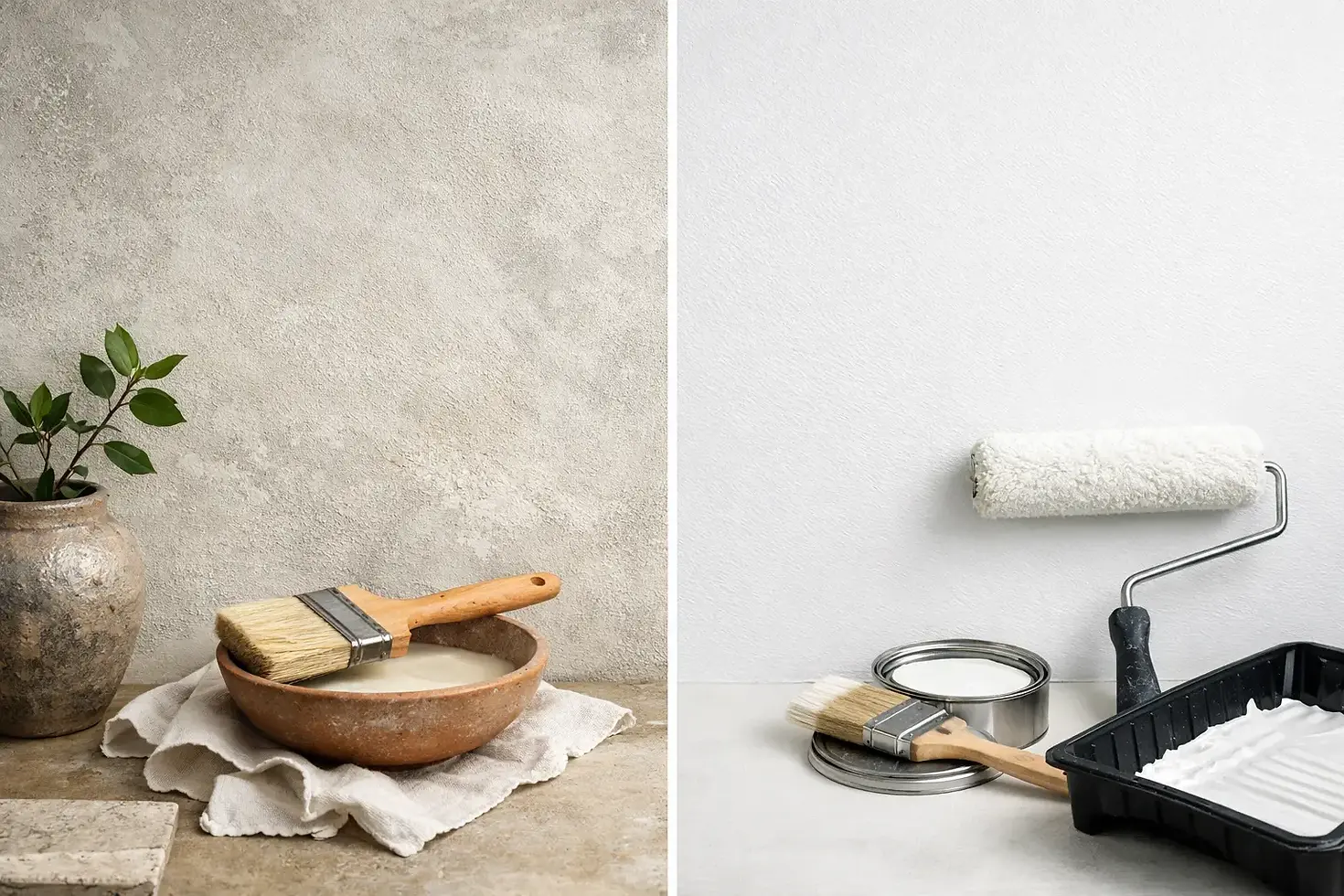
Paint is designed to create an even, controlled finish. Whether you choose matt, eggshell or a more durable scrubbable product, the aim is usually a uniform colour and dependable coverage. It is a practical decorating solution that works across most modern interiors and exteriors when the correct specification is used.
Lime wash is different in both composition and appearance. Made from lime and water, with natural pigments added for colour, it sinks into porous surfaces rather than sitting on top in the same way as conventional paint. The result is a finish with tonal variation, subtle movement and a soft chalky quality. It feels more architectural and less manufactured.
That distinction matters. If you want walls that read as crisp, polished and consistent, paint is the stronger choice. If you want walls with depth and a lived-in elegance, lime wash is often the more interesting finish.
Appearance and style impact
This is usually where the decision is made.
Traditional paint offers control. Colours are repeatable, coverage is predictable and the finished result can be kept very clean. In contemporary homes, new builds, rental properties and commercial settings, that consistency is often exactly what is needed. It suits spaces where sharp presentation, straightforward maintenance and a refined finish matter most.
Lime wash is more expressive. It catches natural light beautifully and shifts slightly across the wall, creating a softness that flat paint rarely achieves. In period homes, it can feel particularly at home because it sits comfortably with original features, older plaster and more textured architecture. In modern interiors, it can also be used to stop a room feeling too flat or overly perfect.
The trade-off is that lime wash is not supposed to look machine-made. Brush marks, clouding and natural variation are part of the appeal. For some clients, that is timeless elegance. For others, it can read as uneven if they were expecting a standard painted finish.
Surface compatibility matters more than most people expect
One of the biggest differences in the lime wash vs paint decision is what you are applying it to.
Paint can be used on a wide range of surfaces when they are properly prepared and primed. Plaster, plasterboard, timber, masonry and previously decorated walls can all be painted successfully with the right system. That flexibility is one reason conventional paint remains the default choice for so many projects.
Lime wash needs a porous, mineral-based surface if it is to perform properly. It works best on materials such as lime plaster, stone, brick and some mineral renders. It is not naturally suited to every previously painted wall. If the surface has modern vinyl paint, patchy repairs or areas that prevent absorption, extra preparation may be needed, and in some cases lime wash may not be the right route at all.
This is where professional advice makes a real difference. A finish can only ever be as good as the surface beneath it.
Durability and day-to-day practicality
For busy homes, commercial spaces and high-traffic areas, durability cannot be an afterthought.
Standard paint usually wins on straightforward practicality. Good quality modern paints are designed to cope with everyday life, and many are wipeable or scrubbable once cured. In hallways, kitchens, children’s bedrooms or rental properties, that resilience is often the deciding factor. If a mark appears, cleaning is simpler. If a wall is damaged, touching up is usually more predictable.
Lime wash is more delicate. It is breathable and beautiful, but it is not typically chosen for its scrub resistance. In lower-traffic rooms, feature walls, formal living spaces or design-led interiors, that is less of an issue. In family zones where walls take regular knocks, fingerprints and scuffs, it may require a more considered approach.
That does not mean lime wash is fragile in the wrong sense. On suitable surfaces, it can age gracefully and develop character over time. But it is a finish for clients who appreciate material quality and natural variation, not those expecting every wall to behave like a hard-wearing contract coating.
Breathability and older buildings
This is where lime wash can offer a genuine advantage.
Older properties often need finishes that allow walls to breathe. If moisture becomes trapped behind modern non-breathable coatings, problems can follow, especially in traditional buildings built with solid walls and lime-based materials. Lime wash is vapour permeable, which means moisture can move through the wall more naturally.
For period homes, cottages, listed properties and heritage refurbishments, that can make lime wash not only attractive but appropriate. It supports the way older buildings were designed to function.
Paint is not a single category here. Some modern masonry and mineral paints are also breathable, while many standard interior paints are less so. The right answer depends on the building fabric, not just the desired look. Using the wrong product on an old wall can create expensive issues that no colour chart will reveal.
Application and workmanship
Painting to a high standard takes skill, especially where preparation, repair work and finish quality are concerned. But lime wash is even less forgiving of poor technique.
With standard paint, the process is relatively familiar: prepare, fill, sand, prime where needed, and apply in even coats. The craftsmanship lies in the detail - sharp lines, flawless surfaces and a finish that looks clean from every angle.
Lime wash is more specialised. The application method affects the final movement of colour, and the finish develops as it dries. Coverage can look patchy during the process before settling into its intended character. That can be unsettling if you have not seen it before. Achieving a refined lime wash effect takes judgement, consistency and an understanding of how the material behaves on the chosen surface.
For design-led interiors, that specialist workmanship is often what separates a premium finish from an experiment that did not go to plan.
Cost and long-term value
Paint is generally the more economical option, especially on straightforward projects with standard surfaces and accessible rooms. Materials are usually less expensive, labour is more predictable and future redecoration is simple.
Lime wash tends to cost more, partly because the finish itself is more specialist and partly because surface preparation can be more involved. If walls need adjusting to create a suitable substrate, the cost can rise further.
That said, value is not the same as lowest price. In the right setting, lime wash can transform a room in a way standard paint does not. Clients often choose it not because it is cheaper, but because it creates an atmosphere worth investing in.
Which finish is right for your property?
If you want dependable durability, easy upkeep and a crisp, consistent result, paint is usually the practical winner. It is especially well suited to family homes, rentals, commercial spaces, high-traffic areas and most modern interiors.
If you want softness, texture and a finish with natural depth, lime wash is hard to beat. It works particularly well in period properties, considered renovations and statement interiors where the wall finish is meant to contribute to the design, not simply cover the surface.
Some projects benefit from both. Standard paint may be the right choice for circulation spaces and bedrooms, while lime wash is reserved for a feature wall, a principal reception room or a space where you want a more elevated, bespoke feel. That balanced approach often delivers the best of both worlds.
At Vision Painting & Decorating, this is exactly where careful specification matters. The right finish should suit the property, the use of the space and the level of refinement you expect when the work is complete.
A well-finished room always looks effortless, but the decision behind it rarely is. Choose the surface treatment that respects the building, supports how you live, and gives the room the quality it deserves.


Comments