
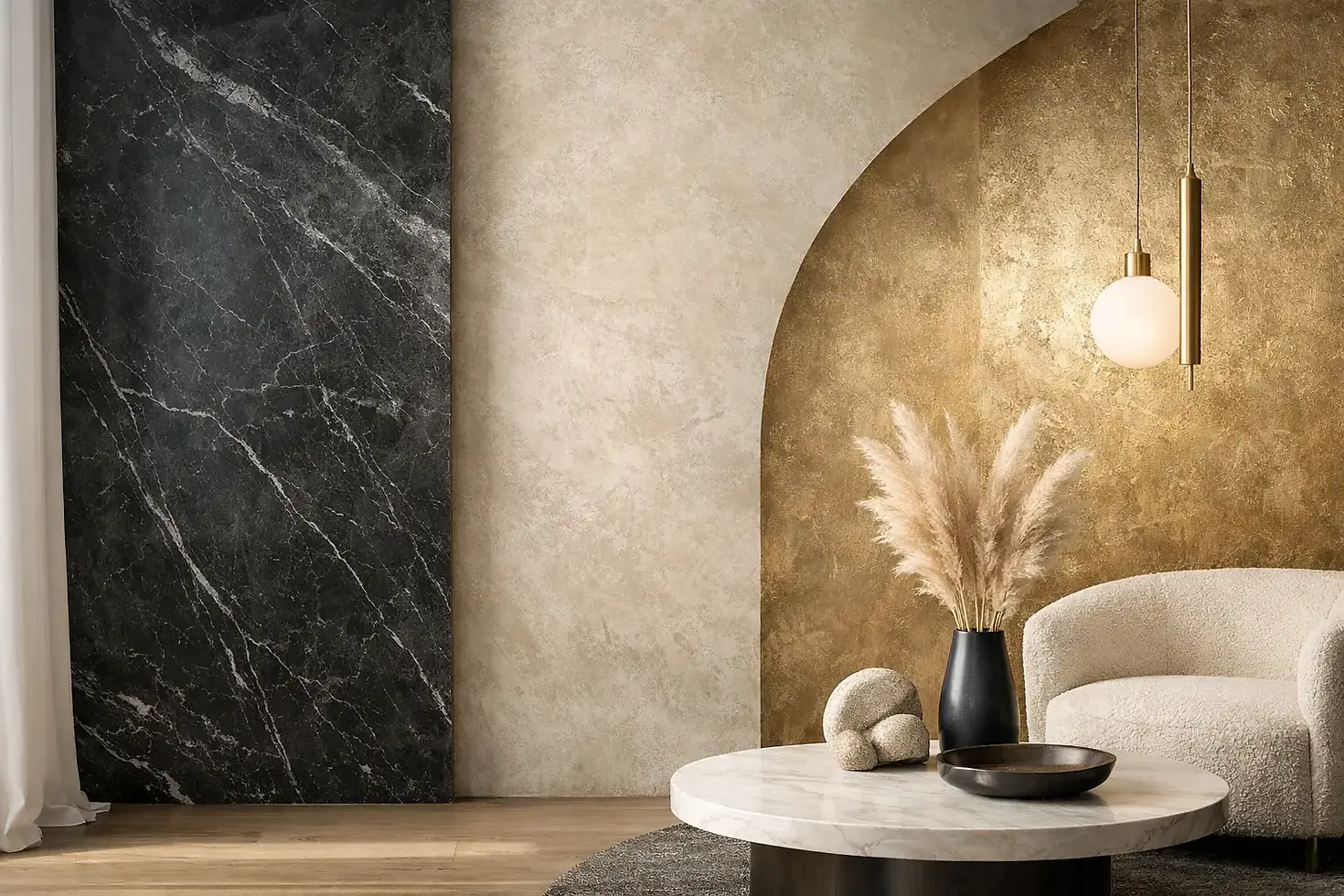
Luxury Wall Texture Trends for Refined Interiors

A wall does not need a loud pattern or a dramatic colour to make a room feel considered. Often, the difference is in the way light settles across the surface: a soft clouding of tone, a mineral movement, or a hand-worked finish that gives the room real depth. Luxury wall texture trends are increasingly centred on this quieter, more enduring form of impact.
For discerning homeowners, developers and commercial clients, textured finishes offer an alternative to flat painted walls without sacrificing elegance. The best results feel tailored to the architecture, furnishings and natural light of the space. They create atmosphere first and demand attention second.
Luxury wall texture trends are becoming more understated
The premium interiors market is moving away from heavily glittered feature walls, obvious metallic effects and textures that look manufactured. In their place are finishes with variation, softness and a sense of permanence. These surfaces have character, but they do not compete with every other element in the room.
Warm neutrals remain a strong choice, including chalky whites, stone, putty, mushroom, soft taupe and muted clay. Their appeal lies in the way they change through the day. Morning light may bring out a pale mineral quality, while evening lighting reveals a richer, more enveloping tone.
This is where specialist finishes differ from a standard coat of paint. A quality decorative finish has movement within the surface. It may be subtle enough to read as plain from a distance, yet reveal layers of colour and texture as you move closer. That restraint is what keeps it feeling luxurious.
The finishes shaping high-end interiors
French wash for layered, elegant movement
French wash remains one of the most sought-after decorative finishes for bedrooms, reception rooms, hallways and refined commercial settings. Applied by hand in translucent layers, it creates a gentle, brushed variation across the wall rather than a uniform block of colour.
The finished effect can be light and airy or deep and atmospheric, depending on the chosen palette and application. Soft limestone shades suit period homes and contemporary schemes alike, while deeper earthy tones can give a dining room or boutique hospitality space a more intimate character.
French wash requires judgement at every stage. The direction of application, the level of contrast and the treatment of edges all influence the result. It should look natural and composed, never streaky or accidental.
Lime wash for natural depth
Lime wash is valued for its velvety, mineral appearance and its distinctive tonal variation. It gives walls a lived-in, architectural quality that works particularly well in homes with original features, renovated farmhouses, coastal properties and contemporary spaces that need warmth.
Because lime wash reacts to the surface and absorbs differently across an area, no two walls are identical. This is part of its appeal, but it also means expectations need to be clear. Clients looking for a perfectly even finish may be better served by a softer decorative paint effect. Those who appreciate authentic variation will find lime wash difficult to match.
A successful lime wash scheme depends on careful colour sampling. A shade can appear significantly different on a large wall than it does on a small sample board, particularly in north-facing rooms or spaces with limited daylight.
Fine plaster-inspired finishes
Plaster-inspired decorative finishes are also gaining attention for their clean, contemporary look. These can range from finely textured, almost suede-like surfaces to more expressive trowelled effects with visible movement. They are particularly effective behind a bed, around a fireplace, in a statement hallway or on a carefully selected commercial feature wall.
The key is proportion. A more pronounced texture can look exceptional on one focal wall, but using it throughout every room may make a home feel heavy. In open-plan spaces, a single textured surface can instead help define a dining area, reading corner or reception zone without adding physical partitions.
Soft tonal effects rather than sharp contrast
The most successful wall finishes tend to sit within a close tonal family. Think warm white layered over pale beige, greyed green over stone, or a soft clay tone developed through lighter and darker washes. This approach adds visual interest while allowing artwork, joinery, lighting and furnishings to retain their place in the scheme.
High contrast can work, especially in a dramatic entrance or hospitality setting, but it needs a confident overall design. In most residential interiors, understated depth will have greater longevity and broader appeal.
Texture must suit the room, not just the trend
A finish that looks beautiful in a design photograph may not be right for a busy family hallway or a compact room with little natural light. The practical use of the space matters as much as the aesthetic brief.
In bedrooms, French wash and subtle lime wash can create a calm, restorative backdrop. In living rooms, they add depth around fireplaces, bespoke cabinetry and architectural details. Hallways benefit from finishes that establish a strong first impression, though durability and ease of maintenance should guide the specification.
For commercial interiors, texture can communicate quality before a visitor speaks to anyone. A refined wall finish in a reception area, showroom, restaurant or private office can make the setting feel established and considered. However, high-contact areas need suitable products and a realistic maintenance plan. Not every decorative finish is designed for repeated cleaning or heavy wear.
Bathrooms and kitchens require additional care. Moisture, steam and splashes can affect certain finishes, so the system must be selected for the environment and correctly protected where appropriate. A specialist decorator will advise whether a textured feature wall is suitable, rather than applying a fashionable finish where it will not perform.
Meticulous preparation protects the final effect
Decorative wall finishes do not hide poor walls. In fact, their layered nature can expose uneven filling, sanding marks, cracks and inconsistent absorbency. The preparation beneath the finish is therefore just as important as the artistic application on top.
Walls should be assessed for soundness, repaired where necessary and prepared to an even standard. Stains, previous coatings and repaired areas may require primers or base coats designed to control absorption. Corners, ceilings, sockets and joinery also need to be carefully masked and detailed, as a luxury finish can be undermined by untidy edges.
This is one reason premium wall texture work should not be treated as a quick decorating add-on. It takes time to sample, prepare and apply correctly. The cost reflects specialist skill, quality materials and the care required to achieve consistent results across the full wall area.
How to choose a finish with confidence
Start with the feeling you want the room to have. If the aim is calm and timeless, a soft mineral wash in a warm neutral is often the right direction. If you want a stronger focal point, a plaster-inspired finish with controlled movement may offer the impact you need without relying on bold colour.
Consider the existing materials in the room as well. Natural timber, stone, aged brass, linen and wool tend to sit beautifully with hand-applied finishes. In a more modern home with sleek joinery and polished surfaces, a fine texture can prevent the scheme from feeling cold or overly uniform.
Samples are essential, but they should be viewed properly. Place them on the intended wall and assess them in daylight, lamplight and evening light. Look from across the room as well as at close range. A finish should enhance the whole space, not simply impress on a small board.
For bespoke projects across Bangor, North Down, Belfast and further afield, Vision Painting & Decorating approaches decorative walls with the same discipline applied to every premium decorating project: careful preparation, considered specification and exacting workmanship. The aim is an exceptional finish that feels right for the property, not a trend applied for its own sake.
A textured wall earns its place when it gives a room more presence, more warmth and more character without asking for attention every time you walk past it. Choose the finish that will still feel right when the furnishings change, the seasons turn and the room becomes properly lived in.


Comments