
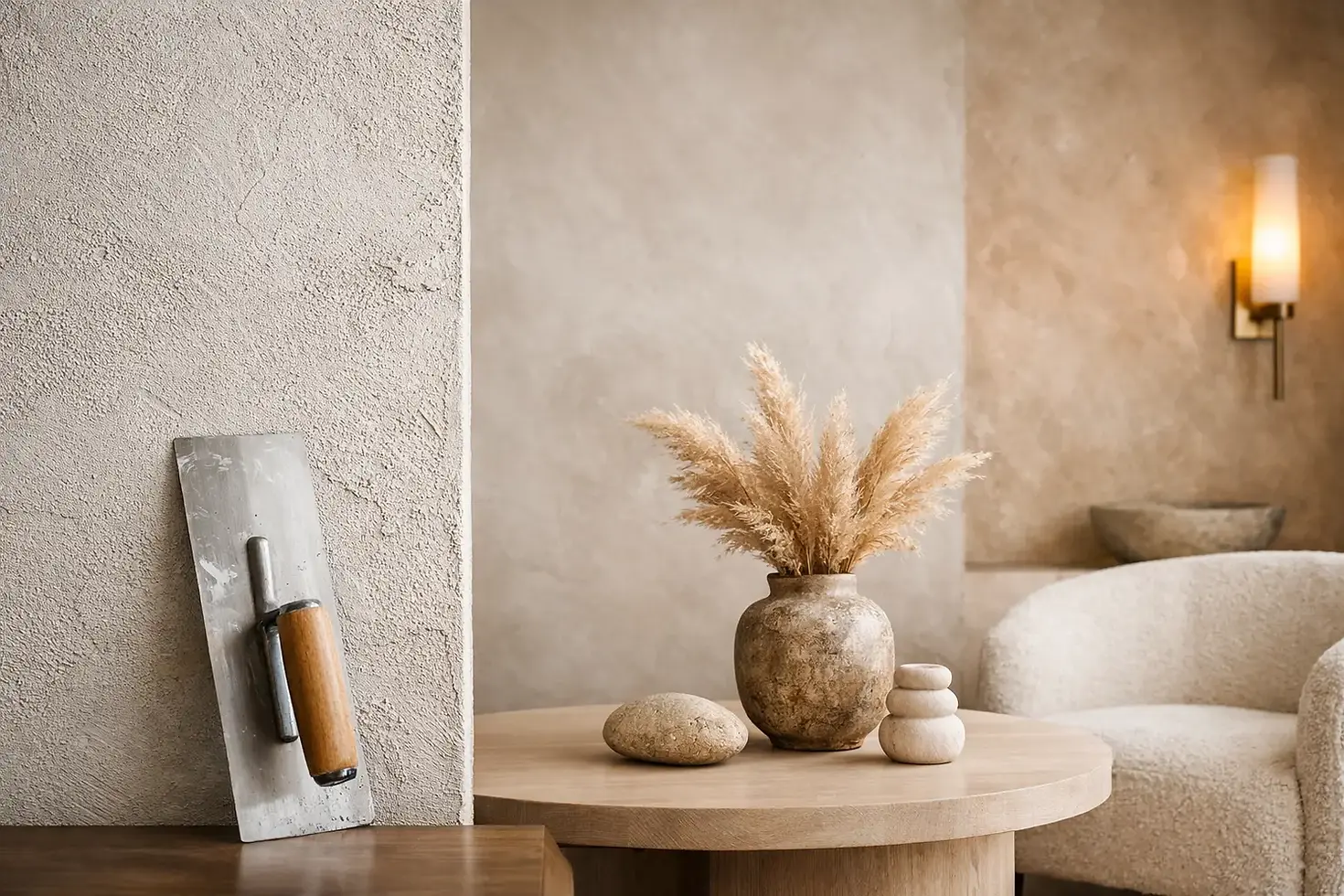
The Textured Wall Finishes Trend, Done Properly

A flat painted wall can look immaculate, yet still leave a room feeling unfinished. The textured wall finishes trend responds to that gap: it brings movement, depth and a quiet sense of character to interiors without relying on busy wallpaper or short-lived decorative effects. For homeowners and commercial clients who value considered design, it is less about following fashion and more about choosing surfaces with lasting presence.
Textured finishes are now appearing in carefully renovated period homes, contemporary new builds, boutique hospitality spaces and reception areas across Bangor, North Down and Belfast. When specified well and applied by a skilled decorator, they soften hard architectural lines, respond beautifully to natural light and make an otherwise ordinary wall feel deliberately designed.
Why the textured wall finishes trend has staying power
The appeal is rooted in a move away from perfectly uniform interiors. For many years, the goal was an even, smooth wall in a single block of colour. That remains the right choice for plenty of rooms, but it can feel visually cold in spaces with modern joinery, stone floors, large glazing or minimal furnishings.
A specialist decorative finish introduces variation without visual clutter. Subtle shifts in tone, a clouded mineral appearance or gentle trowel marks give the eye something to register as daylight changes. The result is sophisticated rather than showy when the texture is restrained and the colour palette is well judged.
There is also a practical design benefit. Texture can make a large open-plan wall feel warmer and more grounded, while a carefully selected finish can add interest where artwork, shelving or architectural detail would overcrowd the room. In commercial interiors, it can establish a premium identity at an entrance, behind a reception desk or within a private dining area.
However, a textured wall is not a cure for poor condition. In fact, decorative finishes often reveal defects that standard matt paint may disguise. Fine cracks, uneven plaster, old repairs, contamination and inconsistent suction all need to be addressed before any specialist material is applied. The finish only looks effortless when the preparation has been anything but.
The finishes shaping refined interiors
Not every textured treatment suits every property. The best choice depends on the light, existing materials, room use and the level of visual movement desired.
Lime wash for soft, mineral depth
Lime wash is valued for its naturally varied, chalky appearance. It creates subtle tonal changes rather than a fixed pattern, giving walls a breathable, organic quality that works particularly well with timber, stone, linen and aged brass. In the right neutral, it can make a contemporary room feel less stark or complement the character of an older property without becoming overly rustic.
Its beauty lies in its irregularity. Clients should expect a hand-finished effect, not the uniform coverage of conventional emulsion. This is precisely why sampling is essential. The colour can read differently across the day and may appear deeper or lighter according to the wall's orientation and surrounding finishes.
Lime wash is often most effective on a feature wall, a principal bedroom, a calm living space or an area with good natural light. It may be less suitable for a heavily marked family hallway or a space where frequent cleaning is expected, unless the selected system has appropriate protection and maintenance requirements are understood from the outset.
French wash for layered elegance
French wash is a decorative technique that builds soft layers of colour to create depth and gentle movement. It can be tailored from barely perceptible tonal variation to a more expressive aged-plaster effect. This versatility makes it particularly useful for clients who want a bespoke result without the heaviness of a heavily textured coating.
The strongest French wash finishes tend to use closely related tones. A warm off-white over a deeper stone shade, or a muted green-grey over a soft neutral, creates a complex surface that remains restful. Contrasts that are too sharp can look theatrical in a domestic setting and may date more quickly.
Applied with control, French wash brings an elegant, hand-crafted quality to dining rooms, stairwells, bedrooms and high-end commercial spaces. It is not a finish to rush. The layered process requires careful timing, consistent technique and a clear understanding of how the final surface will dry.
Fine plaster-inspired and contemporary effects
For clients seeking a more architectural finish, fine plaster-inspired surfaces can offer a clean, tactile alternative. These treatments may range from a velvety, polished look to a subtle concrete-like effect, depending on the product and application method. They can work exceptionally well alongside contemporary kitchens, black-framed glazing and minimal cabinetry.
The trade-off is that stronger effects demand more restraint elsewhere. If the wall has pronounced movement, bold patterned flooring, statement marble and heavily veined worktops may compete with it. A successful interior usually gives one or two materials room to lead.
Choosing the right wall and colour
A feature finish should be positioned where it can be seen and appreciated, not simply where there is an empty wall. Consider the main sightline when entering the room, the wall behind a bed or sofa, a fireplace elevation, or the surface that catches afternoon light. In a commercial setting, it may be the wall that forms the first impression for visitors.
Light is central to the decision. North-facing rooms often benefit from warmer neutrals such as soft putty, mushroom, gentle taupe or muted clay. Rooms with strong sunlight can carry cooler mineral greys, pale olive tones and chalky blue-greens with greater ease. Test samples should be viewed in morning light, evening light and artificial light before committing to a full elevation.
Scale matters as well. A gentle lime wash can work across several walls in a large, light-filled room. A more expressive French wash may have greater impact when confined to one focal wall. Smaller spaces do not automatically need plain paint, but they do benefit from lighter tones and finer movement so the finish does not feel enclosing.
Why expert preparation makes the difference
Premium finishes are defined as much by the surface beneath them as by the final decorative layer. Walls must be assessed for soundness, repaired, filled and sanded to the appropriate standard. Stains, flaky coatings and previous repairs require the correct treatment, while primer choice must suit both the existing substrate and the finish being applied.
This work is not optional. An unevenly prepared wall can cause patchy absorption, inconsistent colour, visible edges or poor adhesion. With specialist finishes, correcting these problems after application can be more time-consuming and costly than preparing properly at the beginning.
At Vision Painting & Decorating, the process begins with the room itself: its condition, lighting, architectural features and intended use. Samples, finish expectations and the level of variation are discussed before work starts, so there is a shared understanding of what a hand-applied surface should look like. Meticulous preparation, premium materials and controlled application are what turn an attractive idea into an exceptional finish.
Is a textured finish right for every room?
It depends. A clean, durable paint system is often the better choice for utility rooms, busy corridors, rental properties and walls likely to receive daily knocks. Texture is most valuable where atmosphere and presentation matter, rather than as a blanket treatment for every surface.
Maintenance should also be considered honestly. Some finishes are more forgiving than others, and touch-ups can be difficult if a repair does not blend into the surrounding tonal variation. A specialist decorator can advise on suitable protective coatings, cleaning methods and whether a proposed location is sensible for the chosen effect.
For those planning a refurbishment or finishing a new-build home, the most successful approach is to choose the finish early. It allows the wall colour, lighting, flooring, joinery and furnishings to work together rather than compete. A textured wall should feel like it belongs to the room from the beginning - a surface with depth, craftsmanship and the confidence to remain beautiful long after a passing trend has faded.


Comments