
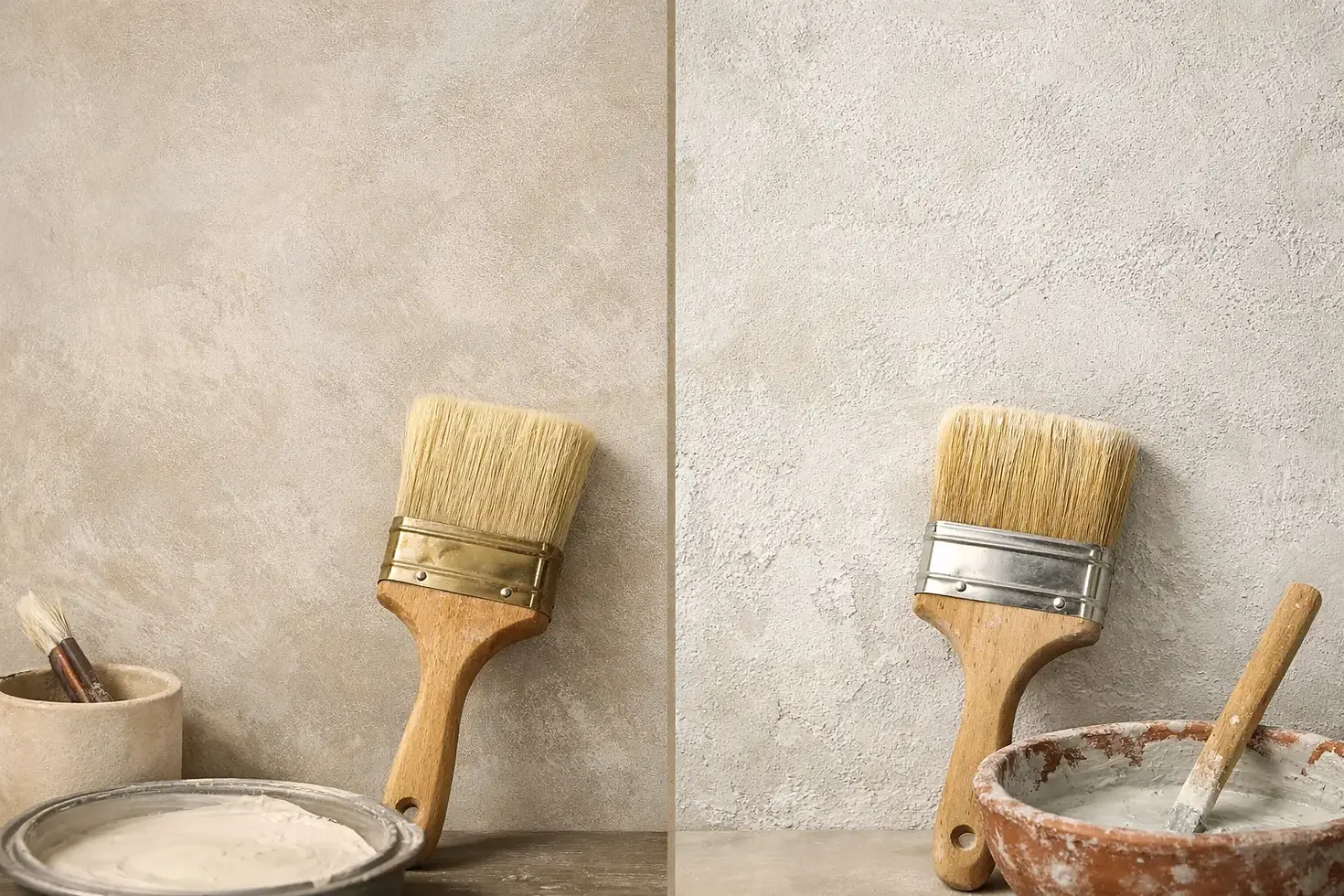
French Wash Versus Lime Wash

A painted wall can look tidy. A specialist finish can change the whole feel of a room. When clients ask about french wash versus lime wash, they are usually not choosing between two colours. They are choosing between two very different moods, levels of movement, and ways light will sit across a surface every day.
Both finishes have real design value. Both can lift a scheme well beyond standard emulsion. But they do not suit every property, room or brief in the same way. If you are investing in a premium decorative finish, the right choice comes down to the look you want, the condition of the background, and how much softness, texture or drama the space can carry.
French wash versus lime wash: the core difference
The simplest way to separate them is this: French wash is a decorative layered paint effect designed to create soft variation, depth and elegance, while lime wash is a mineral-based finish known for its chalky, natural appearance and gentle cloud-like movement.
French wash tends to feel more polished and intentionally decorative. It can bring warmth, richness and a refined sense of texture without looking busy. Done well, it has depth rather than pattern, and movement rather than obvious brush marks.
Lime wash is usually more organic in character. It has a matte, breathable quality and a slightly time-worn look that works beautifully in relaxed, architectural interiors. It often feels quieter than French wash, but also more rustic depending on the application and surrounding scheme.
Neither is better in every situation. The right finish depends on whether you want understated softness, classic elegance, or more visual presence.
The look and feel each finish creates
French wash is often chosen when the goal is sophistication. It can sit comfortably in period homes, contemporary interiors and luxury commercial spaces because it adds depth without demanding attention in the way a bold wallpaper or heavily textured feature wall might. It works particularly well where you want the wall to feel dressed rather than simply painted.
The effect usually comes from layered tones and specialist application techniques that create a nuanced surface. The result can range from subtle and airy to richer and more atmospheric. In dining rooms, lounges, hallways and principal bedrooms, that added depth can make the room feel more considered and complete.
Lime wash has a different strength. It brings a natural, softly broken finish that responds beautifully to light. On a bright wall, it can feel calm and tactile. In muted interiors, it supports a pared-back palette without looking flat. It is often favoured in homes that lean towards natural materials, earthy tones, stone, timber and quieter styling.
Where French wash can read as elegant and decorative, lime wash often reads as architectural and organic. That difference matters. If the room already has ornate details, French wash may enhance them. If the room is more minimal and relies on material quality and tone, lime wash may feel more at home.
Which finish suits your property style?
In a Georgian, Victorian or traditionally detailed property, French wash can be an excellent choice because it complements cornicing, panelling, fireplaces and higher ceilings. It adds a softness that still feels in keeping with formal architecture. It can also work very well in newer homes where clients want to introduce character that standard paint cannot provide.
Lime wash is especially effective in properties with natural texture already built in, such as stone features, exposed brick, timber elements or pared-back plasterwork. It suits contemporary homes too, especially where the design brief is calm, tonal and understated.
That said, style matching is never mechanical. A modern home can look exceptional with French wash if the palette is restrained and the application is refined. Equally, lime wash in a more traditional setting can feel elegant rather than rustic when the surrounding finishes are strong and well balanced.
The deciding factor is usually not the age of the property but the interior direction. If the room needs softness with a dressed, luxurious edge, French wash is often the stronger choice. If it needs natural movement and an easy, lived-in quality, lime wash may be the better fit.
French wash versus lime wash in practical terms
Visual appeal matters, but practical performance matters as well. Decorative finishes only look exceptional when the preparation underneath is right. Surface condition, existing coatings and room use all influence the final result.
French wash is generally more controlled in appearance and can be adapted to suit a wider range of interiors. It often offers more flexibility in tone, depth and finish level. For clients who want a premium feature wall or a complete room with a tailored decorative effect, it gives more room for design direction.
Lime wash has its own advantages, especially for those who want a breathable mineral finish and a more natural look. It can be ideal in the right setting, but it is less about precision and more about embracing subtle irregularity. That is part of its appeal, but it can surprise clients expecting a uniform decorative result.
Maintenance expectations also differ. French wash can be a more straightforward choice for clients who want a luxury finish that still feels manageable in a busy home or commercial setting. Lime wash can require a little more understanding, especially if the client is unfamiliar with the way natural finishes weather visually over time.
Surface preparation makes or breaks the result
This is where specialist decorating matters. Neither finish should be treated as a shortcut to character. If the wall is poorly prepared, uneven, contaminated or unstable, the final appearance will suffer no matter how premium the materials are.
French wash relies on carefully prepared backgrounds to achieve the right softness and depth. Any defects beneath the finish can interrupt the effect and make the wall look patchy for the wrong reasons. The beauty of the finish lies in controlled movement, not accidental flaws.
Lime wash is also highly dependent on preparation, but for slightly different reasons. Because it is a mineral finish with a distinctive matte character, it can react strongly to the substrate and absorbency of the surface. That can be desirable when managed properly, but problematic when it is not.
For both options, proper assessment comes first. The wall needs to be stable, suitably prepared and compatible with the chosen system. That is one reason clients often prefer an experienced decorating specialist rather than experimenting on a main living space.
Where each finish works best
French wash is particularly strong in reception rooms, bedrooms, stairwells, entrance halls and feature walls where elegance is the priority. It can also work well in boutique commercial interiors, hospitality settings and premium developments where a sense of finish and distinction matters.
Lime wash is often at its best in bedrooms, calm living areas, reading rooms and design-led spaces where a softer, more natural atmosphere is the goal. It can be beautiful across larger wall areas because its movement is gentle rather than theatrical.
In hard-working spaces, the conversation becomes more specific. Kitchens, busy corridors and heavily used commercial areas may still be suitable, but the finish must match the practical demands of the space. This is where professional advice is valuable, because beauty on a sample board does not always translate directly to real-world use.
How to choose with confidence
If you are weighing up french wash versus lime wash, start with the room itself. Ask what the space needs rather than which finish is currently fashionable. Does the room need added warmth and refinement? French wash may be right. Does it need softness, calm and natural character? Lime wash may suit better.
Then think about light. French wash can create beautiful depth in both natural and artificial light, often adding richness as the day changes. Lime wash tends to respond in a quieter, more powdery way, with a soft tonal shift rather than a strong decorative statement.
Finally, be honest about expectations. If you want a finish that feels tailored and elevated, French wash often gives the clearer decorative result. If you are drawn to subtle imperfection and a more organic aesthetic, lime wash may be exactly what the room needs.
At Vision Painting & Decorating, this is never approached as a quick product choice. It is a finish decision, and finish decisions deserve careful preparation, skilled application and a clear understanding of the result you want to live with. The best walls are not only attractive on day one. They continue to look right in the room, in the light, and in the life of the property.
If you are choosing between the two, trust the room to tell you what belongs there. The most successful decorative finishes do not shout for attention. They simply make the whole space feel better resolved.


Comments